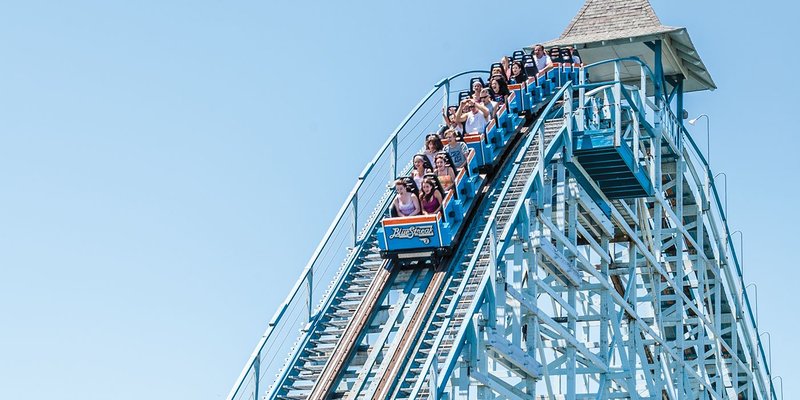
Pre-coach kids on the scary moments. Surprise causes the tears, not the ride.
The insight
Most kids who melt down on a ride are not reacting to the speed or the drop. They are reacting to something they did not see coming. The dark tunnel. The giant roaring animatronic that appears out of nowhere. The wall of water that soaks them before they even had time to brace. Surprise is the problem. Once you understand that, the fix is simple: take away the surprise.
If your child knows exactly what is coming, a ride that would have caused tears becomes something they are genuinely proud to have done. Kids under eight especially want to feel in control of the experience. A little advance knowledge hands them that control.
Why this works
Think about how adults handle unfamiliar rides. You watch a POV video, read a description, maybe ask a rider in the exit queue what the big drop feels like. You are not looking for reasons to skip it. You are calibrating your expectations so the experience matches what you signed up for.
Kids work the same way. When a five-year-old hears a sudden 90-decibel roar from an animatronic they could not see coming, their brain flags it as a threat. When that same kid already knows "there is a big T-Rex right here, and he is going to roar at us," they are not surprised. They might even be looking forward to it. Their brain files it under "the thing I already knew about" rather than "danger I was not prepared for."
Speed and drops are almost never the real culprit. Darkness is. Loud unexpected noises are. Sudden cold water is. A little preview neutralizes all of them.
How to use this on your next visit
The night before you go, pull up a quick on-ride video on YouTube. Most major attractions at parks like Universal, Disney, Six Flags, and Cedar Fair have full POV videos posted by other guests. Watch it with your kid. Pause at the key moments and narrate them plainly.
"See that? It goes dark here for about ten seconds. Then the big dragon appears right there. Then we get a little wet at the end."
Keep the language matter-of-fact. You are not reassuring them that it is fine, you are briefing them on what to expect. There is a difference. Reassurance implies there might be something to fear. A briefing implies this is just information.
Then as you walk through the queue, run through the sequence again. "Dark tunnel, then the dragon, then the splash." Do it once or twice. By the time the ride vehicle leaves the station, your kid is not a nervous passenger. They are someone who already knows the plan.
A quick example
Say you are heading to a park with a classic log flume. The big drop at the end is visible from the midway, so your kid has been asking about it. But the ride also passes through a long enclosed section with thunder sound effects and strobing lightning before the drop. That section is the one that surprises people.
Show your kid the on-ride video at the hotel the night before. "Okay, we go through this part with thunder and lightning first, it is pretty cool actually, and then we come out and there is the big drop right here." When you are standing in line, point up at the enclosed section of the track and remind them: "That is the thunder part we watched."
When the boat goes in, they are already ready. You will probably hear them narrate it out loud in real time. "Here comes the thunder! Now the lightning! Now the drop!" That is not a kid who is scared. That is a kid having the best day.
Let Thoosie help you prep
Thoosie can show you which rides are on your family's plan for the day so you know exactly which ones to preview the night before. Check the ride details in the app, line up your on-ride videos, and walk in with kids who already know the script. The ride does the rest.
 Thoosie