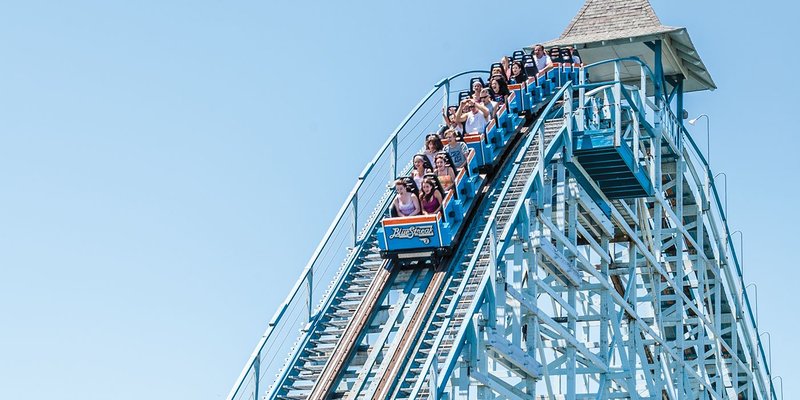
The number on the sign hides which way the line is moving.
Line-length signs at theme parks feel like a promise: "45 minutes from this point." What they never tell you is the direction of travel. A sign reading 45 minutes can mean a line that's quietly shrinking toward 20, or one that's about to balloon to 90. The number is a snapshot, and a snapshot can't show motion. Once I started reading lines for their momentum instead of their length, I stopped getting burned by rides that looked fine and turned into afternoon-killers.
Why The Number Lies By Omission
Posted wait times aren't live in the way most people assume. Parks calculate them by tagging a guest at the entrance and timing how long they take to reach the ride, then displaying that figure until the next measurement rolls in. That means the number you're reading describes people who are already deep in the queue, since it's history, not a forecast. A ride that just dumped a parade crowd into its entrance can still show a low number for another ten or fifteen minutes before the posted time catches up to reality.
The direction matters more than the value because you're not joining the line as it is now; you're joining the line as it will be over the next hour. A 40-minute wait that's trending down is a genuinely good deal, because by the time you're inside, the real wait may be 25. A 40-minute wait that's climbing is a trap, because you'll likely stand for 60 or more. Same sign, completely different decision.
How To Read The Line's Momentum
I look at the queue itself, not just the board. The clearest tell is the entrance: if people are streaming in faster than the ride is pulling them forward, the line is growing, regardless of what the sign claims. If the entrance is quiet and the switchbacks near the front are thinning out, it's shrinking. I also watch how tightly packed the first few switchbacks are, which a dense clot right at the mouth of the queue means a surge just arrived.
Timing context does the rest of the work. Lines swell right after a nearby show or parade lets out, in the late morning as the crowd finally reaches the back of the park, and whenever a neighboring headliner goes down and dumps its guests onto everything around it. Lines shrink during those same parades and shows, at meal times, and in the last hour before close. If a sign says 30 minutes at 11 a.m. on a rising tide, I treat it as 45. If it says 30 during the fireworks, I treat it as 15 and run.
Turning It Into A Habit
The practical move is to pair every sign with one question: which way is this going? I'll often note a ride's posted time, walk past, and check it again twenty minutes later to confirm the trend before committing. Two data points beat one every time. When I'm deciding between two rides with identical posted waits, momentum is the tiebreaker, I take the shrinking line without hesitation.
The number on the sign is real, but it's only half the information. Read the direction the line is moving, and you'll spend your day walking onto rides other people are still queuing to regret.
 Thoosie